
 By admin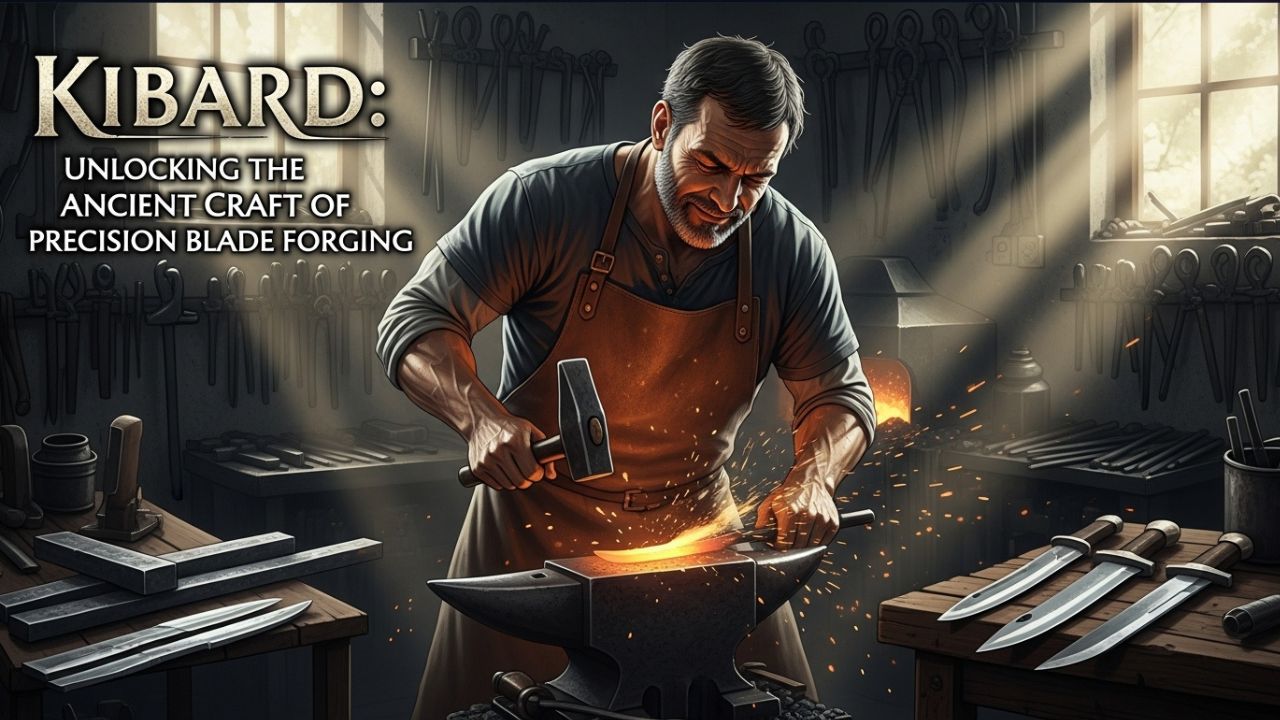
In the realm of ancient crafts and metallurgical arts, few disciplines carry the mystique and technical profundity of kibard. This specialized practice, rooted in the creation of exceptionally fine and resilient blades, represents a confluence of art, science, and tradition. While the term might not be familiar to the mainstream, within circles of master smiths and historians, kibard is synonymous with a pinnacle of forging achievement. This article delves into the essence of kibard, tracing its historical origins, decoding its meticulous processes, and examining its cultural legacy and contemporary relevance. More than mere blacksmithing, kibard is a testament to human ingenuity in manipulating the very essence of steel.
Historical Origins and Evolution of Kibard
The story of kibard is etched into the annals of early advanced metallurgy. Its origins are often traced to mountainous regions where rich ore deposits and the constant need for superior tools and weapons catalyzed innovation. The practice evolved separately but in parallel to famous traditions like those of the Japanese katana or Damascus steel, yet it developed its own unique philosophical and technical identity.
The core objective of kibard was always clear: to produce a blade of unrivalled performance. This meant achieving a perfect, often paradoxical, balance between hardness and flexibility, sharpness and durability. Early practitioners of kibard were not just artisans; they were early materials scientists, experimenting with furnace temperatures, quenching mediums, and folding techniques through painstaking trial and observation. These methods were closely guarded, passed down through generations within guilds or families, making the mastery of kibard a sacred and secretive vocation. The historical trajectory of kibard mirrors the development of civilization itself, from ritualistic bronze-age daggers to the essential steel tools that shaped agriculture, construction, and warfare.
The Technical Pillars of Kibard Forging
The reputation of kibard rests on a triad of technical pillars: material selection, differential heat treatment, and precise finishing. Each step is a deliberate and controlled process where minute deviations can determine success or failure.
-
Material Selection and Purification: The journey of a kibard blade begins with the selection of specific iron ores and steels. Master smiths would often create their own composite billets, combining high-carbon steel for edge retention with softer, tougher iron for the spine.
-
The Art of Differential Heat Treatment: This is the most critical and defining phase of kibard.Unlike uniform hardening, the kibard technique involves applying heat and subsequent quenching to create zones of varying hardness within a single blade. Specifically, the smith hardens the cutting edge to extreme rigidity so it can hold a sharp edge. In contrast, the spine and core remain more elastic to absorb shock. Historically, smiths achieved this differential treatment by applying customized clay coatings before quenching. Essentially, this clay insulates specific parts of the blade, thereby allowing for controlled cooling.The resulting visible transition line, often a wavy pattern known as the hamon in other traditions, is a celebrated hallmark of a true kibard blade.
Cultural Significance and Symbolic Power
The Modern Renaissance of Kibard
In an age of mass production and powdered metallurgy, one might assume kibard is a relic of the past. Paradoxically, we are witnessing a significant revival.
-
For these modern artisans, learning and practicing the principles of kibard is the ultimate challenge and a mark of mastery.
-
Custom and Collector Markets: There is a growing high-end market for custom-made, performance blades for culinary, sporting, and collecting purposes.