 By admin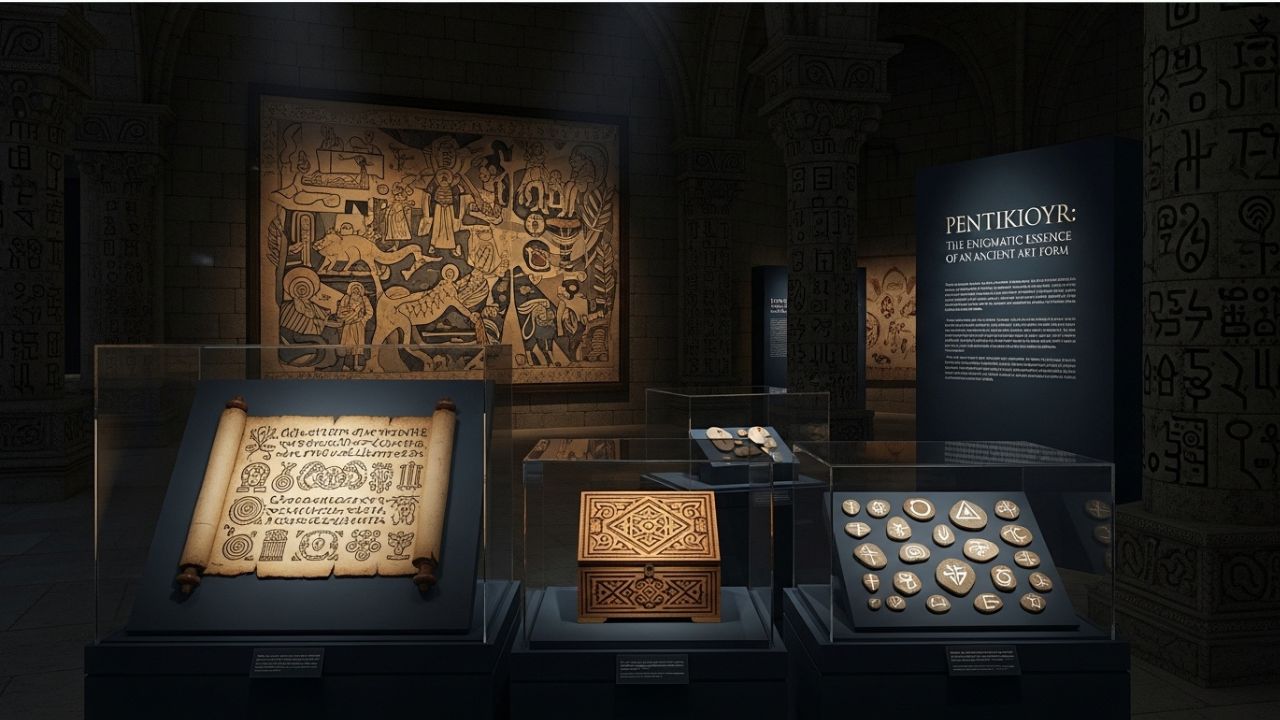
In the vast tapestry of human cultural expression, certain art forms stand out not for their ubiquity, but for their profound depth and enigmatic charm. One such tradition is Pentikioyr, a practice whose very name evokes a sense of timeless artistry and spiritual craftsmanship. Far more than a mere technique, Pentikioyr represents a holistic philosophy where material, artisan, and intent intertwine. This article seeks to illuminate the path into the heart of Pentikioyr, exploring its historical origins, foundational principles, and the resonant echoes it finds in the contemporary creative landscape. To understand Pentikioyr is to begin a journey into a world where every object tells a story and every creation is a meditation.
The Historical Roots and Evolution of Pentikioyr
Tracing the precise lineage of Pentikioyr is an exercise in piecing together fragments of history, oral tradition, and archeological subtlety. Scholars often place its emergence in the fertile cultural crossroads of ancient Anatolia and the surrounding regions, where trade routes facilitated a fusion of techniques and ideologies. The term Pentikioyr itself is believed to derive from an archaic compound word suggesting “the hand’s wisdom” or “skilled contemplation,” hinting at its core identity as a mindful, manual craft.
Initially, the practice of Pentikioyr was intimately linked to ritual and daily life. Artifacts suggest its application in creating ceremonial vessels, talismanic jewelry, and narratively rich textiles. These were not decorative afterthoughts but central to communal identity and spiritual communication. The evolution of Pentikioyr was not linear; it absorbed influences from neighboring civilizations, its techniques refining and its symbolic language expanding through centuries. It weathered periods of obscurity, often preserved within specific guilds or families, ensuring that the essential wisdom of Pentikioyr was passed down not through manuals, but through the guided movement of hands.
Core Philosophies: The Guiding Principles of Pentikioyr
At its essence, Pentikioyr is governed by a set of non-negotiable principles that elevate it from craft to a form of philosophical expression.
Unity of Material and Spirit: A practitioner of Pentikioyr begins not with a sketch, but with a dialogue. The material—be it clay, fiber, metal, or wood—is studied for its inherent spirit, memory, and potential. The artisan’s role is to collaborate with the material, not dominate it, allowing its natural qualities to guide the form.
The Imperative of Intentionality: Every stroke, knot, or molding in the Pentikioyr process is infused with deliberate thought. The creator’s focus and intention are considered as tangible as the physical medium, embedding the final object with a resonant energy. This mindfulness transforms production into a meditative practice.
Symbolism as a Native Language: Pentikioyr artifacts are rarely literal. They speak through a complex lexicon of geometric patterns, organic forms, and symbolic motifs. A spiral might represent a journey, a particular weave could signify protection, and a color gradient might echo the transition from dusk to dawn. Decoding a piece of Pentikioyr is to read a philosophical text.
The Pentikioyr Process: A Symphony of Techniques
The methodology of Pentikioyr is as varied as its materials, yet a common rhythmic discipline underlies all its manifestations. The process is typically slow, rejecting industrial haste in favor of accruing meaning.
-
Attunement and Preparation: This initial stage involves cleansing the space, centering the mind, and ceremonially preparing the materials. It is a ritual of separation from the mundane world.
-
Formative Dialogue: Here, the hands begin their work, guided by the principles discussed. In clay-based Pentikioyr, this might involve coil-building that follows the material’s resistance. In textile work, it could be a dyeing process where colors are allowed to merge organically.
-
Symbolic Inscription: As the form takes shape, the artisan integrates the symbolic language. This could take the form of carving, inlay, embroidery, or applied texture. The maker considers each mark, ensuring it contributes to the object’s narrative whole.
-
Completion and Release: The final act is not merely a finishing touch but a blessing or release of the object into the world. The artisan acknowledges the object’s new life separate from their own, carrying the essence of the Pentikioyr process forward.
Pentikioyr in the Modern World: Resonance and Revival
In an age of mass production and digital ephemerality, the principles of Pentikioyr have found a powerful, renewed relevance. The contemporary slow movement, with its emphasis on sustainability and mindfulness, draws direct parallels from the Pentikioyr philosophy. Modern artists and craftspeople are looking to its tenets to create works that counter alienation, producing objects with soul and story.
Furthermore, therapeutic arts communities have embraced the meditative, process-focused aspects of Pentikioyr as a tool for mental well-being and presence. Its influence is also visible in design thinking, where the principle of “unity of material and spirit” encourages deeper respect for sustainable resources and human-centric creation. The revival of Pentikioyr is not a nostalgic reenactment but a selective, adaptive integration of its timeless wisdom to address modern needs for authenticity and connection.
Conclusion
Pentikioyr speaks to us not from a distant past, but as a living, urgent voice in the present. It confronts our modern paradigms of speed and disposability with a powerful counter-narrative: that true value emerges from mindful engagement. This ancient practice affirms that beauty takes root in intention, that ordinary objects can carry extraordinary narratives, and that the very act of making forges a transformative dialogue between hand, heart, and material.
Ultimately, to engage with Pentikioyr is to make a quiet but radical choice. It is a choice to prioritize process over product, meaning over mass, and connection over consumption. By preserving and reinventing the spirit of Pentikioyr, we do more than honor a tradition. We reclaim a fundamental human capacity for sacred craftsmanship. This enduring legacy offers a vital reminder. In a fragmented world, our most profound connections are often those we make with our own hands. We guide raw material into a form that holds both history and hope.