
 By admin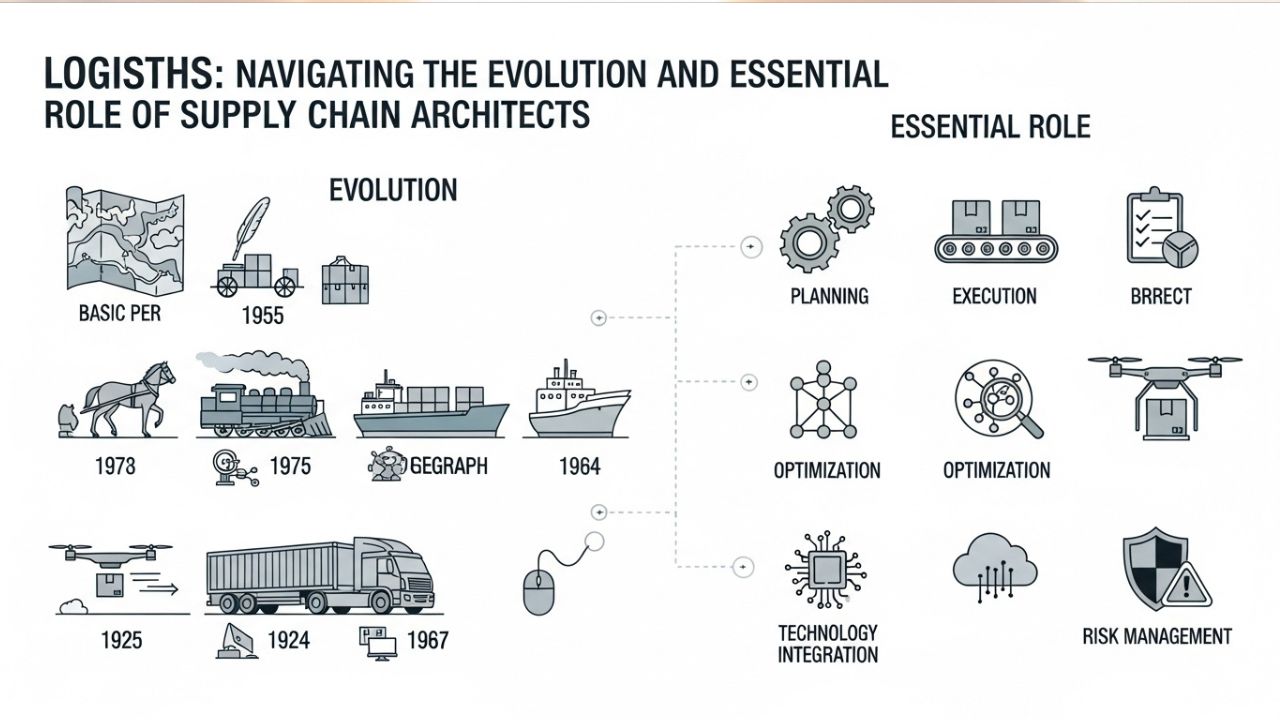
In the intricate ballet of global commerce, where goods journey from raw material to finished product in a customer’s hands, a specialized group of professionals operates as the indispensable choreographers. These are logisths—the strategic architects and tactical managers of the supply chain. Often overshadowed by the broader term “logistics,” the concept of a logisth embodies a more holistic and sophisticated expertise. It represents a shift from viewing logistics as mere transportation and storage to recognizing it as a critical, integrated function requiring analytical prowess, technological fluency, and strategic vision. This article explores the evolving domain of the logisth, examining their core responsibilities, the skills that define them, and their undeniable impact on efficiency, sustainability, and economic resilience.
The Modern Logisth: More Than Movement and Storage
The traditional perception of logistics often conjures images of warehouses and trucks. The contemporary logisth, however, operates on a vastly more complex plane. They are the synthesizers of information, technology, and physical flow. At its core, the role of a logisth is to design, execute, and control the efficient, forward-and-reverse flow and storage of goods, services, and related information. This process spans from the point of origin to the point of consumption, all with the explicit purpose of meeting customer requirements profitably.
The key differentiator for a logisth is systems thinking. They don’t see a shipment in isolation; they see a node in a dynamic network. Their decisions in procurement affect inventory levels, which influence warehouse space, which impacts transportation costs and delivery timelines. A skilled logisth constantly balances these interlocking variables, optimizing for cost, speed, and reliability in an environment fraught with unpredictability—from port congestions and fuel price volatility to shifting consumer demands and geopolitical disruptions.
Core Competencies of a 21st-Century Logisth
To navigate this labyrinth, a successful logisth must cultivate a diverse and deep skill set. These competencies merge the quantitative with the qualitative, the technical with the strategic.
1. Analytical Acumen and Data Literacy: Modern supply chains generate torrents of data. A proficient logisth must be adept at interpreting this data to forecast demand, identify inefficiencies, and simulate scenarios. Mastery of key performance indicators (KPIs)—such as order accuracy, inventory turnover, and on-time in-full (OTIF) delivery—is non-negotiable. They use analytics not just to report on the past, but to predict and shape the future.
2. Technological Integration: The toolbox of the logisth is increasingly digital. They must understand and leverage technologies like Transportation Management Systems (TMS), Warehouse Management Systems (WMS), and Enterprise Resource Planning (ERP) platforms. Furthermore, familiarity with the Internet of Things (IoT) for real-time asset tracking, Artificial Intelligence (AI) for predictive analytics, and blockchain for enhanced transparency is becoming essential. The logisth is not necessarily the coder, but the strategic implementer who harnesses technology to solve real-world flow problems.
3. Risk Management and Agile Planning: The past few years have underscored that supply chains are vulnerable. A strategic logisth is a professional risk manager. They develop contingency plans, diversify sourcing and transportation modes, and build buffer strategies without crippling efficiency. Their goal is to create a supply chain that is both lean and resilient—able to withstand shocks and adapt quickly to new realities.
4. Sustainability and Ethical Stewardship: Today’s logisth is also an environmental and ethical steward. There is growing pressure from consumers, regulators, and investors to green the supply chain. This involves optimizing routes to reduce carbon emissions, selecting eco-friendly packaging, ensuring ethical labor practices among suppliers, and designing efficient reverse logistics for recycling and returns. The sustainable logisth proves that ecological responsibility and cost efficiency can be aligned.
The Strategic Impact of the Logisth
The work of a logisth transcends operational details to deliver profound strategic value to organizations and the broader economy.
Driving Profitability and Competitive Advantage: Efficient logistics are a direct lever for profitability. By reducing freight costs, minimizing inventory holding expenses, and eliminating waste, the logisth protects the bottom line. Moreover, a reliable and fast supply chain becomes a powerful competitive weapon, enabling companies to promise and deliver superior customer service, which drives loyalty and market share.
Enabling Globalization and Accessibility: The globalized market we enjoy is fundamentally built on the expertise of logisths. They make it feasible and cost-effective to source materials from one continent, manufacture in another, and sell worldwide. They bridge distances and overcome regulatory complexities, making diverse products accessible to a global audience and fueling economic development.
Crisis Response and Social Responsibility: The critical role of the logisth is never more visible than during crises. Whether coordinating the distribution of life-saving medical supplies during a pandemic or delivering aid to disaster-stricken regions, their skills in network design, prioritization, and execution become a matter of public welfare. In these moments, the logisth transitions from a business function to a vital social actor.
The Future Trajectory for Logisths
The domain of the logisth will continue to evolve, driven by automation, advanced robotics, and an ever-greater emphasis on data-driven decision-making. However, the human element—the strategic oversight, creative problem-solving, and ethical judgment of the logisth—will remain irreplaceable. The future will likely see the logisth acting more as an orchestra conductor of automated systems, focusing on high-level strategy, relationship management, and innovation.
In conclusion, to refer to these professionals merely as logistics managers is to undersell their profound contribution. The logisth is the strategic architect of flow, the silent engineer of our material world. They ensure that shelves are stocked, factories run, and online orders arrive as promised. In an era defined by interconnectedness and volatility, the expertise of the logisth is not just a business necessity; it is a cornerstone of modern economic and social stability. Their work, though often out of sight, is fundamentally what keeps the world moving forward.
ALSO READ:
Pasonet: Transforming Rural FinTech Through Agent-Networked Banking